Following in the Footsteps of Distinguished Figures
Corners with memories
Through its streets, El Puerto de Santa María pays tribute to figures who have shaped its history and culture. Plaques and busts mark key locations where notable individuals left their mark, spanning literature,medicine, politics, and navigation. This route offers a chance to discover the legacy of those who helped shape the city´s identity.
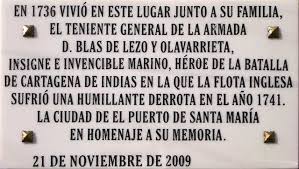
Blas de Lezo Plaque (1689-1741)
C/ Virgen de los Milagros, 70
He stands out as one of the most emblematic heroes of the Spanish Navy. He is renowned for his successful defense of Cartagena de Indias in 1741, where – despite having lost a leg, an arm, and an eye in previous batlles – he managed to repel a British siege with a vastly outnumbered fleet. His courage and strategic skill have been honored posthumously in various Spanish cities.
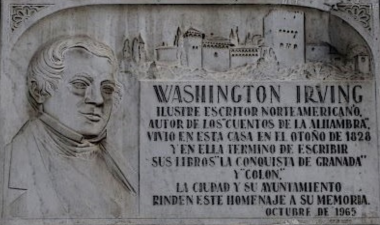
Washington Irving (1783–1859)
C/Palacios, 57, Irving lived in Spain between 1826 and 1829, and later returned as his country's ambassor from 1842 to 1846. Among his best-know works is Tales of the Alhambra, refelecting his fascination with Spain culture. However, his main purpose in traveling to Spain was to conduct research fir his book on Christopher Columbus. During his stay in Madrid, he formed a relationship with Juan Nicolás Böhl de Faber, a relationship that led him to move to El Puerto de Santa María, where he arrived on August 23,1828.
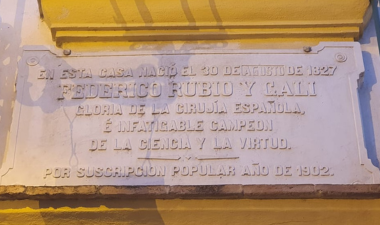
Federico Rubio y Galí (1827–1902)
C/ Virgen de los Milagros, 109
Born in El Puerto de Santa María, Federico was a visionary and reformist physician, and the local health center bears his name. He was a pioneer in the use of ether and chloroform in surgical operations at a time when hygiene was lacking, and is considered the most important surgeon in Spain during the second half of the 19th century. He also founded the Santa Isabel de Hungría Practical Nursing School. In additiction, he was actively involved in politics as a deputy and senator, promoting health reforms. His legacy as a scientist ans humanist is still honored today.
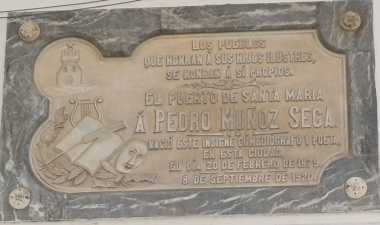
Pedro Muñoz Seca (1879-1920)
C/ Pedro Muñoz Seca, 48
Pedro Muñoz Seca was a renownded playwright born in El Puerto de Santa María on February 21, 1879, on Zarza Street. In recognition of his career, the city Council installed a commemorative plaque in 1920, funded by public subscription, on the house where he was born-- Nevería Street, later renamed Pedro Muñoz Seca Street. The inscription highlights the city´s deep affection for its beloved son. During the ceremony, Muñoz Seca delivered an emotional speech in which he expresseded his gratitude and emphasized his devotion to the Virgen de los Milagros, the city´s patroness.
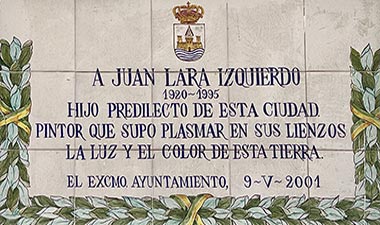
Juan Lara (1851-1923)
C/ Pagador, 20
A key figure in the political and cultural life of El Puerto, Juan Lara served as the city´s mayor and was a tirelless advocate for urban and social development. He championed local artists, promoted the creation of cultural spaces, and played a central role in perios of urban transformation.
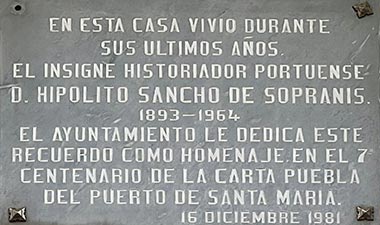
Hipólito Sancho (1893-1964)
C/ Luna, 10
Born in El Puerto de Santa María, he focused his historical research on El Puerto, Jerez, and Cádiz from 1925 onward. Although he began by studying religous topics related to the Dominicans, from 1925 he dedicated his work to recovering and sharing key episodes through the Jerez Center for Historical Studies. His work, rigorous and thoroughly documented, remains an essential source for understanding the history of El Puerto and its role in the late Middle Ages.
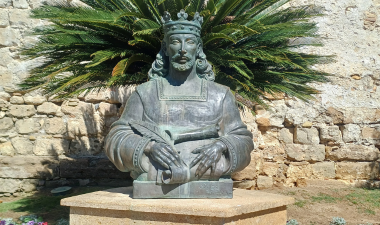
Alfonso x El Sabio (1221-1284)
C/Cañas
Honoring the 13th- century Castilian king, who reconquered the Muslim town of Al-Qanatir in 1260 and renamed it Santa María del Puerto in 1281. That same year, he granted the Carta Puebla, incorporating the city into the Crown of Castile. He also transformed the Muslim mosque into a Christian church, today know as the Castle of San Marcos. Alfonso X is also remembered for his Cantigas de Santa María, which recount the miracles of the Virgin Mary. This bust is a tribute to his historical and cultural legacy in the city.
Juan de la Cosa (1460-1510)
Pl. Juan de la Cosa
This bust honors the prominent Cantabrian navigator and cartographer Juan de la Cosa, know for his participation in Christopher Columbu´s vogayes and for creating in 1500 the first know map depiciting the American continent. The bust not only commemorates his legacy but also serves as a point of interest along the city´s route, inviting locals and visititors to reflect on El Puerto´s role in the beginnings of globalization.
.JPG)
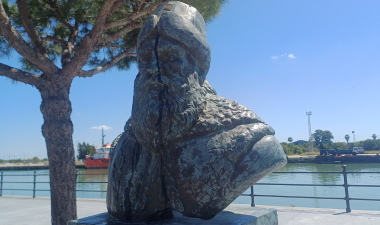
Piotr Ivánovich Potiomkin (1617 - 1791)
Avda. Bajamar
He was an influential Russian military leader and statesman, known for his close relationship with Catherine the Great. Renowned for his strategic skill, he played a key role in Russia´s territorial expansion, particularly during the conquest of Crimea. He also organized and promoted the development of new cities in the conquered regions. His legacy includes both military victories and administrative reforms that strengthened Russia´s power. His name became immortalized in the expression "Potemkin villages" referring to his ambition to create the appearance of prosperity.
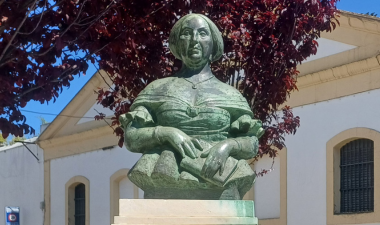
Cecilia Bölh de Faber (1796- 1877)
Plaza del Ave María
She was an influential 19th-century Spanish writer, one of the first authors to give voice to Spanish costumbrista iterature, which focused on local traditions and rural life. Her most notable work, La gaviota, is a novel that reflects the customs and values of Andalusian society in her time. Thoughout her life, she championed the role of women in literature, becoming a literary reference in an era dominated by men. Her legacy endures as a pioneering figure in Spanish women´s literature.
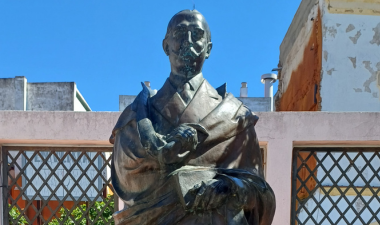
Pedro Muñoz Seca (1879-1920)
Pl. Isaac Peral
Inaugurated in 1950, this bust honors the renowned playwright born in the city. It commemorates his legacy as one of Spain´s great exponents of comedy. Muñoz Seca is famous for works such as "La venganza de Don Mendo". This monument highligts his cultural significance for El Puerto de Santa María, celebrating his contribution to the permofing arts. The busts is located in a prominent spot in the square.
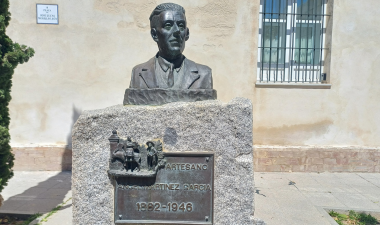
Ángel Martínez (1882 - 1946)
C/ Postigo
He was a writer, craftsman, and internationally renowned Nativity scene sculptor. He worked as a master cabinetmaker at the San Luis Gonzaga school, where he began modeling all kinds of figures in polychrome fired clay. He used local people as models for his figures. While respecting the classic episodes and characters of traditional Nativity scenes, he invented a series of scenes and figures that depicted the rural life of the people of Cadiz.
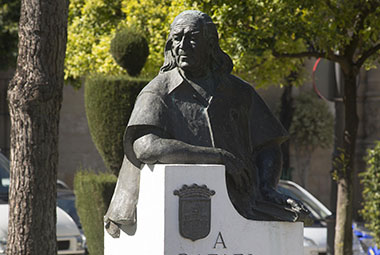
Rafael Alberti Merello ( 1902 - 1999)
Plz. Polvorista
He was one of the most prominent poets of the Generation of 27 and a key figure in 20th-century Spanish literature. Born in El Puerto de Santa María, his work spanned various genres, from poetry to theater and painting. His style evolved throughout his life, moving from an initial modernism to a deeper political commitment after the Spanish Civil War. Rafael Alberti spent years in exile, but his return to Spain in 1997 marked the revival of his literary presence. His legacy endures as an essential voice in Spanish poetry and as a symbol of cultural resistance.
Manuel Camacho, El Chusco (1934-1986)
C/ Guadalete
Inaugurated in 1986, it honors the great composer and lyricist of the Cádiz Carnival. He excelled in the comparsas category, creating groups such as Aires Bandoleros and Poetas Andaluces. His legacy endures in the history of the carnival, serving as a reference for future generations. This bust celebrates his contribution to the carnival and his influence on local culture, and was created to commemorate his significant impact on the art of the Cádiz Carnival.
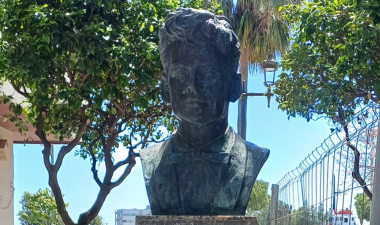
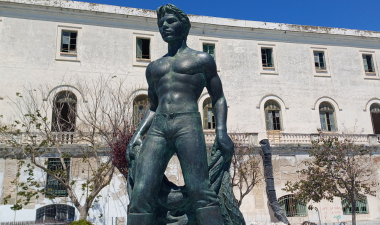
Monumento al Marinero 1983
Avda. Bajamar
This bronze sculpture pays tribute to the figurre of the sailor, honoring the memory of deceased and missing sailors, as weññ as the city´s maritime tradition. Inaugurated on April 11, 1983, the work was created by the local sculptor Francisco Javier Tejada Prieto. The sculpture depicts a sailor with nets and fish at his feet, symolozing the city´s connection to the sea and the importance of fishing in its history and economy.